

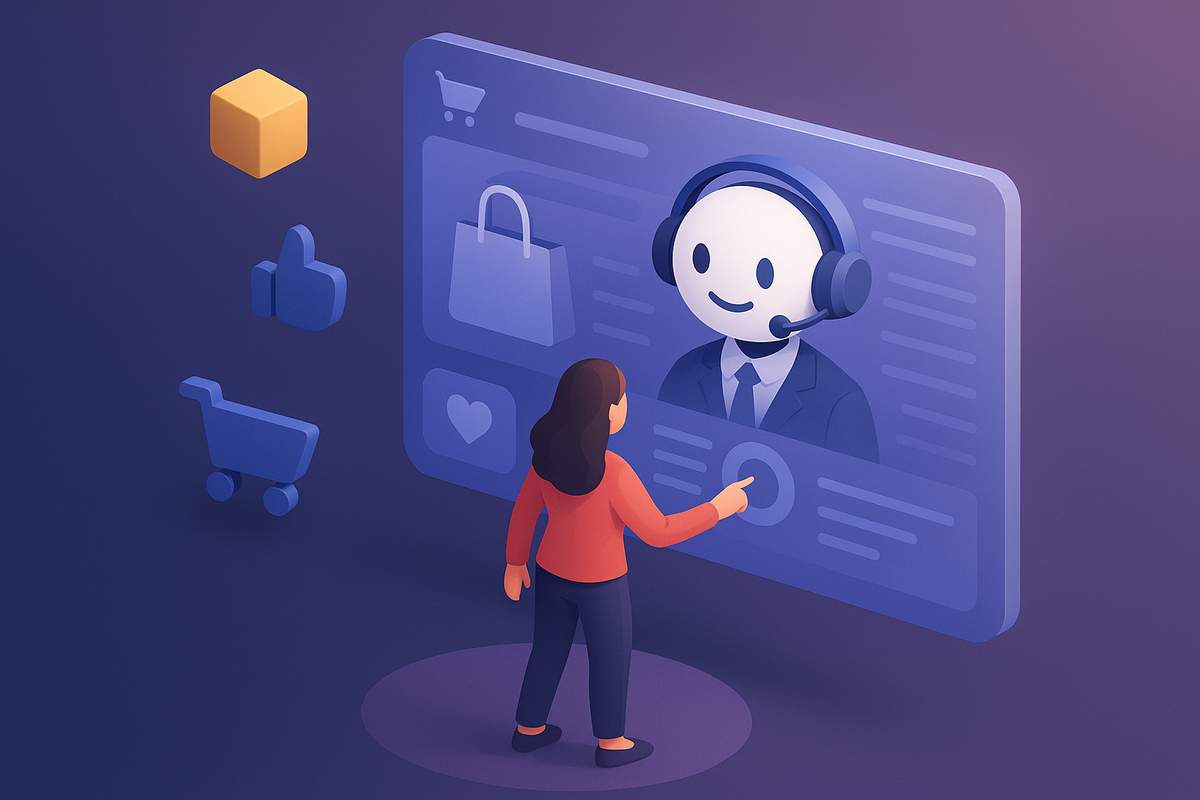
eCommerce has evolved through multiple waves: mobile commerce, omnichannel retail, social commerce, and—most recently—AI-personalized shopping. But a new revolution is emerging in 2025: Agentic eCommerce, powered by autonomous AI agents capable of making decisions, completing tasks, and managing end-to-end shopping journeys on behalf of consumers and businesses.
This is not just another upgrade. Agentic eCommerce represents a fundamental shift in how people discover, evaluate, purchase, and reorder products. It unlocks a future where shopping becomes more automated, intelligent, and deeply personalized—reducing friction while boosting satisfaction and conversion rates.
What Is Agentic eCommerce?
Agentic eCommerce refers to AI-driven systems—called “agents”—that can independently perform tasks such as:
-
Product discovery
-
Price comparison
-
Negotiation
-
Cart creation
-
Reordering
-
Customer support
-
Returns and warranty handling
Unlike chatbots or rule-based automation, AI agents can think, reason, learn, and act based on user needs, preferences, context, and real-time data.
In simple terms:
Agentic eCommerce is the evolution from “search and shop” to “tell me what I need—and handle the rest.”
Why Agentic eCommerce Is the Next Big Shift
The rise of agentic eCommerce is driven by several converging factors:
1. AI Models Becoming Autonomous
Generative AI models like GPT-5, Gemini, and Llama can now perform multi-step tasks without manual prompts.
2. Real-Time Commerce Data Feeds
Agents can fetch live inventory, pricing, availability, and delivery timelines across retailers.
3. Consumer Demand for Zero-Effort Shopping
People want convenience: subscription buying, one-click reorders, predictive restocking—all of which agents can automate.
4. Retail Competition and Personalization
Brands must deliver hyper-personalized experiences to stay relevant.
Agentic systems provide this at scale.
How Agentic eCommerce Works
Here’s a simplified version of the agentic shopping flow:
Step 1: User Intent Identified
The AI agent understands a need—either through a prompt (“Buy me running shoes”) or by prediction (low pantry stock detected).
Step 2: Autonomous Research & Comparison
It analyzes thousands of products, reviews, delivery options, and prices.
Step 3: Negotiation & Optimization
The agent finds the best deal, applies coupons, or even negotiates with seller APIs.
Step 4: Autonomous Purchase
It completes checkout automatically or sends a quick approval request.
Step 5: Post-Purchase Management
The agent tracks delivery, manages returns, and maintains warranty records.
This creates a seamless, hands-off shopping experience.
Where Agentic eCommerce Will Make the Biggest Impact
1. Grocery & Daily Essentials
Automated daily/weekly replenishment based on consumption patterns.
2. Fashion & Apparel
Agents curate outfits, track size changes, and find alternatives when items are out of stock.
3. Electronics
Agents compare specs, identify best prices, and ensure compatibility.
4. Healthcare & Wellness
Automated refills for prescriptions, medical supplies, and supplements.
5. B2B Procurement
Agent-based purchasing will dramatically reduce procurement time and manual evaluation.
Benefits of Agentic eCommerce
✔ Hyper-Personalized Shopping
AI agents deeply understand individual preferences and behaviors.
✔ Zero-Click Convenience
Shopping becomes automatic—no apps, no browsing, no comparison stress.
✔ Better Prices & Deals
Agents can scan the entire web instantly, ensuring optimal cost efficiency.
✔ Reduced Cognitive Load
Consumers offload decision fatigue to intelligent systems.
✔ Higher Conversion & Retention for Brands
Autonomous agents drive consistent, predictable buying behavior.
Agentic eCommerce for Brands: A New Way to Compete
Retailers must prepare for an era where AI, not humans, becomes the primary customer interface.
Strategies for Brands to Win in Agentic Commerce
-
Adopt AI-friendly product data, including structured attributes and real-time feeds.
-
Provide agent APIs for pricing, negotiation, inventory, and delivery.
-
Focus on trust, transparency, and complete product information.
-
Implement AI-driven personalization engines to feed agent recommendations.
-
Use predictive inventory systems to match agent-driven demand patterns.
Agentic commerce rewards brands that are technologically mature and data-rich.
Challenges & Ethical Considerations
While promising, agentic eCommerce raises new concerns:
▪ Trust & Accuracy
Agents must avoid biased or harmful recommendations.
▪ Privacy & Consent
Clear data permissions are crucial as agents access personal shopping behavior.
▪ Competitive Fairness
Retailers must ensure that agents do not unfairly favor certain brands.
▪ Over-Automation
Consumers should maintain control—even in a fully automated commerce system.
The future must balance automation with ethical responsibility.
The Future of Agentic eCommerce: What’s Coming Next?
Here are the emerging innovations shaping the next 5–10 years:
1. AI Shopping Companions Built into Smartphones
Native “Buy for me” agents integrated into iOS, Android, and wearables.
2. Cross-Platform Shopping Agents
One agent handling Amazon, Shopify stores, DTC brands, grocery apps, and marketplaces.
3. Multi-Agent Systems
One agent analyzes needs, another compares deals, and a third handles logistics.
4. Negotiation Bots Between Consumers and Retailers
Automated real-time price negotiation becomes standard.
5. Autonomous Household Shopping
Smart devices (fridges, washers, home sensors) will initiate purchases on their own.
6. Agent-Driven Loyalty Programs
AI optimizes rewards, cashback, and loyalty redemptions automatically.
Final Thoughts
Agentic eCommerce is the next evolutionary leap—shifting shopping from a manual activity to an autonomous, intelligent, AI-driven experience. It will transform how consumers buy, how brands compete, and how the entire retail ecosystem functions.
Companies that embrace agent-driven commerce early will gain a massive advantage in automation, customer retention, operational efficiency, and long-term loyalty.
The future of eCommerce is not just digital—it’s agentic.