

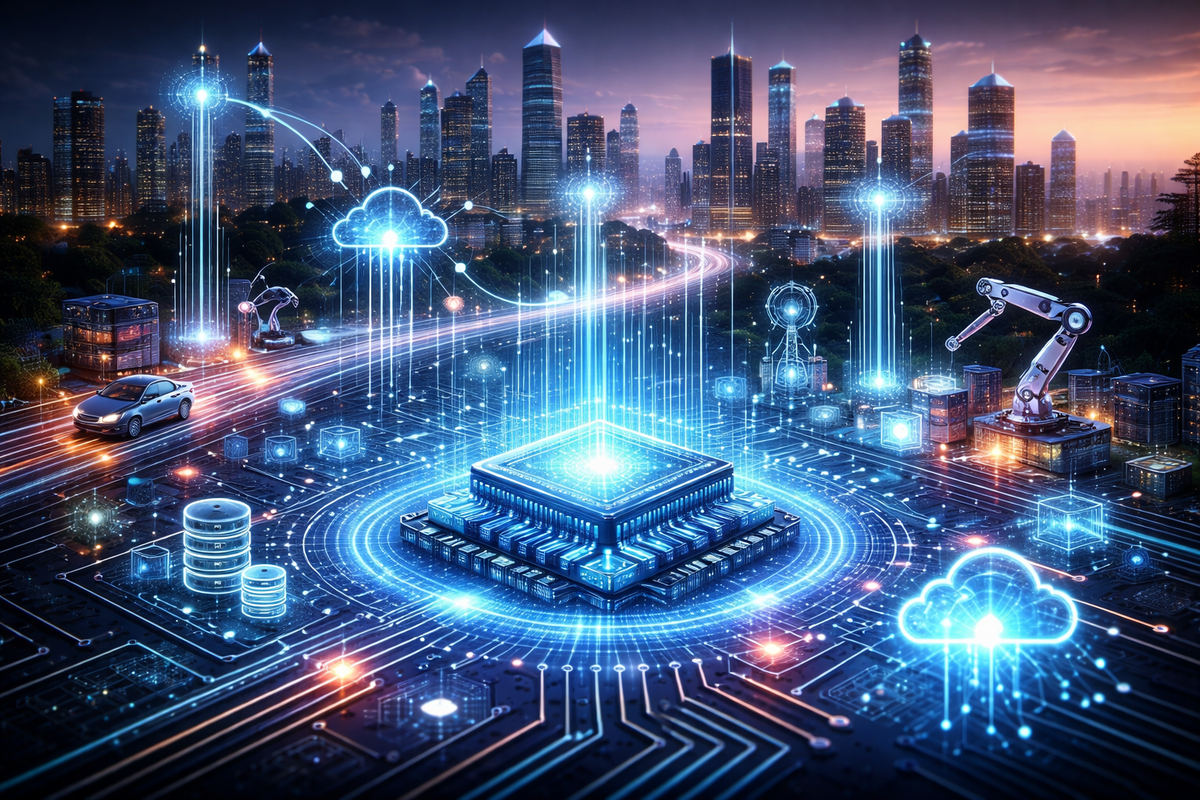
As businesses continue to adopt cloud computing, artificial intelligence, and connected devices, the amount of data being generated globally has increased dramatically. From smart factories and autonomous vehicles to healthcare monitoring systems and retail analytics, modern technologies depend on fast and reliable data processing.
However, traditional cloud computing models are not always sufficient to handle the growing demand for real-time data processing. Sending massive volumes of data to centralized servers can create latency issues and increase bandwidth costs.
To address these challenges, organizations are increasingly turning to edge computing, a technology that processes data closer to its source rather than relying entirely on centralized data centers.
Edge computing is rapidly becoming a key component of modern digital infrastructure and is expected to play a crucial role in the future of connected technologies.
What Is Edge Computing?
Edge computing refers to a distributed computing model where data processing occurs near the location where the data is generated.
Instead of sending all information to a centralized cloud server, edge devices such as sensors, gateways, and local servers perform data processing locally.
This approach reduces the distance that data must travel, enabling faster processing and more efficient decision-making.
Edge computing is particularly useful in environments where real-time responses are critical, such as industrial automation, autonomous systems, and healthcare monitoring.
Why Edge Computing Is Gaining Popularity
The rapid expansion of connected devices and digital systems has created new demands for computing infrastructure.
Several factors are driving the adoption of edge computing:
Growth of IoT Devices
The number of connected devices worldwide continues to increase. Sensors, smart machines, and wearable technologies generate vast amounts of data that must be processed quickly.
Edge computing allows this data to be analyzed locally, reducing delays and improving system performance.
Need for Real-Time Decision Making
Industries such as manufacturing, transportation, and healthcare require immediate insights from data.
For example, an automated manufacturing system must detect equipment faults instantly to prevent downtime. Processing this information at the edge enables faster responses compared to sending data to a distant cloud server.
Reduced Network Congestion
Transmitting large volumes of raw data to centralized servers can strain network bandwidth.
Edge computing reduces this burden by processing and filtering data locally before sending only relevant information to the cloud.
Key Industries Benefiting from Edge Computing
Edge computing is transforming operations across multiple industries by enabling faster data processing and more efficient systems.
Manufacturing
Smart factories rely on connected machines and sensors to monitor production processes. Edge computing helps analyze machine data in real time, improving operational efficiency and reducing equipment failures.
Healthcare
Medical devices and patient monitoring systems generate critical data that must be analyzed quickly. Edge computing allows healthcare providers to process information locally, supporting faster diagnosis and improved patient care.
Retail
Retailers use edge computing to power technologies such as smart shelves, inventory tracking systems, and in-store analytics. These tools help businesses understand customer behavior and optimize store operations.
Transportation
Autonomous vehicles and traffic management systems rely on real-time data processing to ensure safety and efficiency. Edge computing enables rapid decision-making in these environments.
Edge Computing and the Future of Data Infrastructure
As digital transformation continues to accelerate, businesses will increasingly adopt hybrid computing models that combine cloud and edge technologies.
While cloud platforms remain essential for large-scale data storage and advanced analytics, edge computing provides the speed and responsiveness needed for real-time applications.
This combination allows organizations to balance scalability with performance, creating more flexible and efficient technology ecosystems.
The Role of Research and Industry Insights
Because edge computing is still evolving, organizations often rely on detailed research reports and technical resources to understand how the technology can be implemented effectively.
Technology-focused research content helps decision-makers explore topics such as:
-
edge architecture design
-
security considerations in distributed networks
-
integration with cloud platforms
-
industry-specific use cases
These insights enable businesses to evaluate edge computing strategies and identify opportunities for innovation.
The Future of Edge Computing
The future of digital infrastructure will likely involve billions of connected devices generating continuous streams of data.
To support this growth, organizations must adopt technologies that allow faster and more efficient data processing.
Edge computing provides the foundation for this transformation by enabling real-time analytics, reducing latency, and supporting next-generation applications.
As industries continue to explore the potential of connected systems, edge computing will become an essential technology driving innovation across the digital economy.