
Elektrum, A Crypto Ecosystem in Four Layers
Published on 21 Sept 2026
This is an abbreviated preview version of a white paper that I am still writing in my spare time as my day job allows. It pains me to release an incomplete tech development proposal. However, I have recently come to grips with just how challenging the full paper will be to complete, and the worsening financial situation in our country and world certainly will not wait for the final version. I choose to have hope that the right people will find this preview quickly, so that more hands may make lighter work in time to come to our communities’ aid.
The Elektrum Ecosystem is a stack of four financial technologies that use new and existing cryptocurrencies to address real-world, pre-crypto financial challenges. To do this, Elektrum challenges our existing assumptions about digital assets and places perhaps our most enduring financial enemy—inflation—in its sights.
The stack of four fintech solutions address challenges in composite basket cryptocurrency trading, commodity trading, mercantile supply chain financing, and modern advanced compliant digital coins ready to deliver versatile value modes for the new regulatory environment. These four fintech programs back or feed into four principal new crypto assets: Elektrum Ore (a simple way to invest in crypto in general with some downside protection); Elektrum Dust (finally! street-spendable crypto and with inflation protection); Electrum Kernels (a perpetuity fixed-income investment instrument yielding interest on top of inflation protection); and Elektrum Ingots (blockchain mining reward assets with speculation options).
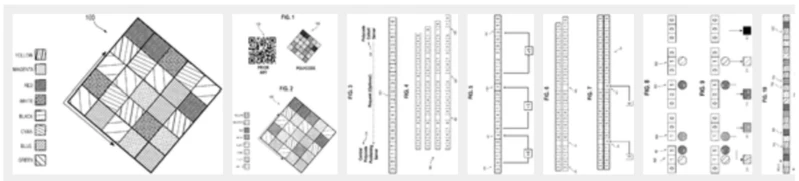
Elektrum uses Polycode, a patented technology invented and owned by this paper's author (U.S. 10,740,666 and 10,997,482).
Digital Treasury Equity Airfoil
The so-called infinite money glitch developed by Strategy (formerly MicroStrategy) has had its ups and downs recently, but in the right conditions it is a very real effect: by consolidating a digital asset in a treasury company, the market price of that asset experiences upward pressure, presenting an opportunity to issue equity at an increased price, which raises capital for further consolidation of that digital asset ad infinitum as long as a conducive environment lasts (as long as a usable wind is blowing, the airfoil force is greater than the wind itself). This proposal does not involve an all-in dependence on this effect but rather using it as an initial ignition stage. Releasing a predetermined number of shares in well-communicated tranches avoids the dilution spiral and maintains confidence. This will raise both operating capital and the stock of crypto needed for Layer 1.
Crypto Composite Investing
As Layer 0 raises crypto stocks (six particular non-stablecoin cryptocurrencies selected for maximum circulation, including Bitcoin and Ether) this mixed crypto is placed in wallets for a type of staking that this proposal envisions as “fracking.” In this type of staking, newly acquired crypto is immediately placed for sale at a slight markup, say 5%. If a customer accepts this markup, they can purchase it immediately using a stablecoin. Usually, a customer will not choose to absorb an immediate markup, but because these offers will not increase in price, they know it will become an attractive price if the free-floating market price increases above it. So, customers may stake their stablecoin as collateral to reserve an option to purchase at this price. At any time, the reserving customer can finalize the purchase at this price (e.g. when the market price exceeds this reserve price) or give up the reservation to recover the staked collateral.
In addition to fracking for profit, customers can also frack for liquidity. In this mode, customers stake their stablecoin and offer their own (lower) price for the crypto in question. If and when the Elektrum system needs liquidity for operations or further investment, it can choose to finalize these sales by issuing the crypto and keeping the stablecoin.
Elektrum Ore
Separately from the fracking staking process, the Elektrum system offers a new cryptographic asset called Elektrum Ore in exchange for the types of crypto which Layer 1 uses. This Ore is essentially a cryptocurrency backed by (and reverse-convertible back into) a composite basket of leading cryptocurrencies. This convertibility has some insurance against depreciation of the underlying currencies, and Ore is forward-convertible into Elektrum Dust over time at the owner’s option. This allows customers to easily invest in multiple cryptocurrencies at once for some diversification, some protection against downside, and the option to convert to a spendable form later.
Commodity Trading
Using revenue generated by Layer 1, the Elektrum system invests in certain precious metals. Small amounts of these precious metals are suspended within a resin and stamped with Polycode to form metal-backed resin solids. These are available for sale to metal-backed currency advocates and other customers, convertible into Elektrum Dust or Polycode signature tickets at slightly more than the metal value (a 100 Electro resin solid may contain 90 Electro worth of precious metal, for example). This provides the customer insurance against Electro ever failing to keep up with inflation as measured by precious metal prices, as the customer can simply crush the resin and extract the metal in that event.
A certain stock of these resin solids will be retained as the backing of a new cryptographic asset called “silk” which will be used to price other commodities. The Elektrum system will operate and/or invest in commodity services firms, buying, selling, transporting, and storing physical commodities in warehouses. The price in silk of a given commodity will only be adjusted annually, and the price of silk in Electro and dollars adjusted as necessary day by day, so that as commodity vendors accumulate silk tokens they are rewarded for continuing to do business with the Elektrum system.
Elektrum Dust
Elektrum Ore from customers of Layer 1 can be “queued and crushed” at the owner’s option into a new crypto asset called Elektrum Dust. This is the asset in this system most like a standard cryptocurrency. The cash, crypto, and commodity assets of the Elektrum Ecosystem principally exist to back this cryptocurrency—measured in units called the Electro—to the millennium dollar, the purchasing power of 1 U.S. dollar on January 1st, 2000 adjusted for inflation. In a high inflation environment, this is an attractive option to customers, and should command a small but useful transaction cost up front to convert. As the Ecosystem grows and develops, Elektrum Dust will be spendable via a debit card for registered users, but even before this point, Dust can be “published” or “issued” as printed tickets scannable as gift cards at various vendors using upgraded point-of-sale software, enabled by Polycode.
Polycode
The author of this paper invented and holds the patent to Polycode, or the “Two-dimensional cryptographic poly-chromatic poly-digital code” to use the language of the patent. This cryptographic barcode is designed to be scanned and retrieve metadata similar to a QR code, but designed with modern hash-based cryptography in mind, serving as an input and output of hashing functions. This technology would be used to generate scannable “signature tickets” that would function at various vendors as scannable gift cards, backed up by Elektrum Dust but paying the vendor in currency like any other gift card.
Mercantile Supply Chain Finance (Crypto-Credit)
With the revenue generated from Layer 2, the Elektrum system loads cash funds into a new fund to back a new crypto asset type. This asset functions in some ways like a stablecoin (though with a price peg that is allowed to “float” somewhat more than most stablecoins), but can also be loaded with collateral by special users and then used to direct leveraged funds.
Elektrum Kernels
Supported by the income from the collateral decay (and using a volatility-absorption token that will be detailed in the full version of this white paper), the Elektrum Ecosystem offers holders of Elektrum Dust the option to exchange (“melt and mint”) a certain amount of dust for an Elektrum Kernel, an instrument which is no longer spendable itself, but instead generates new Dust at a certain rate of its face value. For example, a 1,000 Electro face value kernel might generate Dust at 2% annually, or 20 Electro per year. This is on top of Elektrum’s existing peg to purchasing power. As the protocol calculates that new kernels are supportable, they can be auctioned to holders of Elektrum Dust.
Equity and Crypto Speculation
Similar to the manner in which Elektrum Kernels are minted by the conversion of Elektrum Dust, Elektrum Kernels can be “forged” into Elektrum Ingots. An owner of an Elektrum Ingot (whether a person or group of people) can serve as a full client node for a new blockchain protocol which will come to host the Elektrum Ecosystem. These ingots earn the blockchain’s mining reward (“smithing”), but can also serve as the input for conversion (“minting”) into the main sequence coins.