

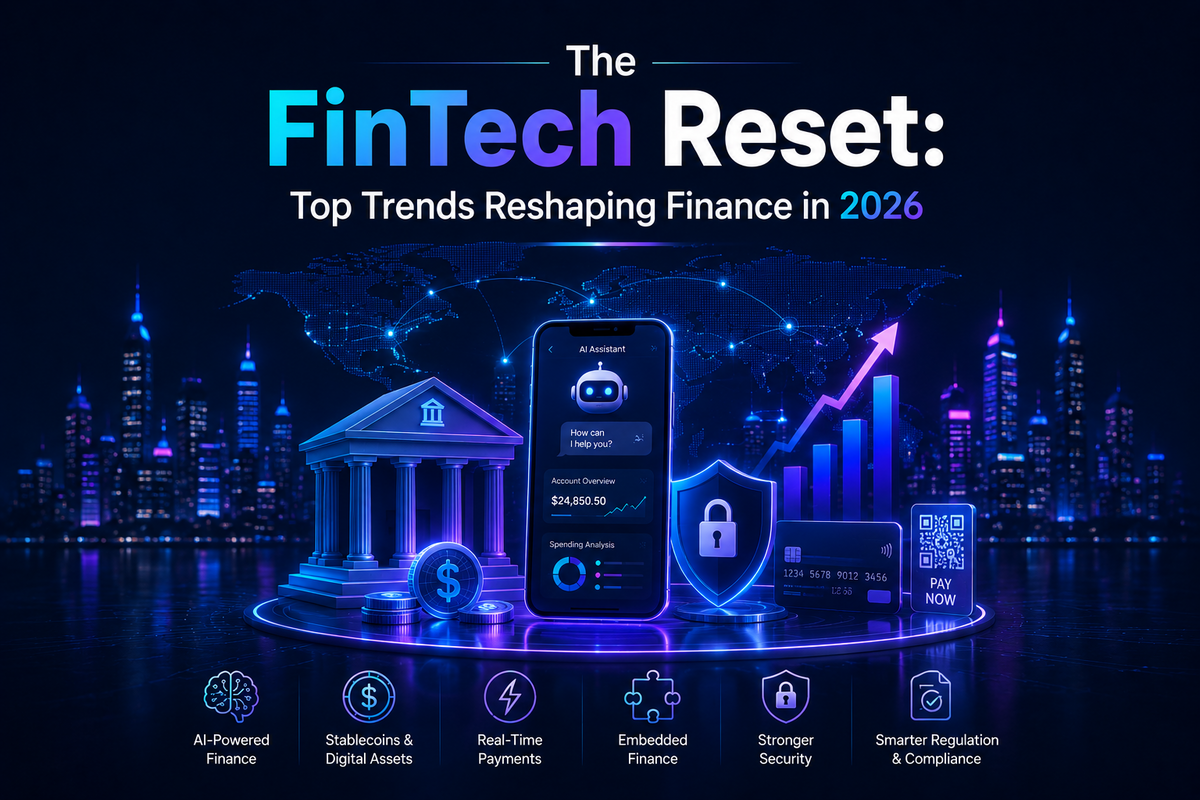
The financial technology industry has never stood still, but 2026 has accelerated its pace like few years before it. From AI-powered banking assistants to the rapid adoption of stablecoins and real-time payment networks, financial institutions are undergoing a transformation that extends far beyond mobile banking apps.
What once seemed like futuristic concepts are now becoming mainstream business strategies. Banks are partnering with fintech startups, regulators are introducing clearer frameworks for digital assets, and consumers are demanding faster, smarter, and more personalized financial experiences.
The biggest story isn't that financial technology is evolving—it's that the entire financial ecosystem is being reimagined.
The Rise of Stablecoins Is Reshaping Digital Finance
For years, cryptocurrencies dominated fintech headlines with dramatic price swings and speculative trading. In 2026, however, the spotlight has shifted toward stablecoins.
Unlike traditional cryptocurrencies, stablecoins are designed to maintain a relatively stable value by being pegged to assets such as the U.S. dollar. Financial institutions, payment providers, and global enterprises are increasingly exploring stablecoins for cross-border payments, treasury management, and faster settlements.
This growing adoption reflects a broader industry shift. Businesses are less interested in speculative digital assets and more focused on technologies that improve operational efficiency.
Stablecoins have the potential to reduce transaction costs, shorten settlement times, and simplify international payments—making them one of the most closely watched developments in fintech today.
Artificial Intelligence Is Becoming Every Banker's New Assistant
Artificial intelligence has moved from the innovation lab into everyday banking operations.
Rather than replacing financial professionals, AI is helping them work smarter. Banks are using machine learning to detect fraud, automate customer service, analyze credit risk, and personalize financial recommendations.
AI-powered virtual assistants can now answer customer queries, recommend financial products, and even identify unusual spending patterns in real time.
Behind the scenes, financial institutions are using AI to improve compliance, automate document processing, and strengthen cybersecurity defenses.
As AI capabilities continue to mature, financial organizations are discovering that technology works best when combined with human expertise rather than replacing it entirely.
Real-Time Payments Are Becoming the New Standard
Consumers have grown accustomed to instant digital experiences, and payments are no exception.
Waiting several business days for money transfers increasingly feels outdated.
Around the world, governments and financial institutions are expanding real-time payment infrastructure, allowing businesses and consumers to transfer funds within seconds instead of days.
For businesses, this means improved cash flow management and greater operational efficiency. For customers, it creates a smoother, more convenient payment experience.
Real-time payments are rapidly becoming an expectation rather than a premium service.
Embedded Finance Is Quietly Changing Customer Experiences
One of fintech's most significant trends isn't happening inside banks—it's happening everywhere else.
Embedded finance allows companies outside the financial sector to integrate banking, lending, insurance, and payment services directly into their digital platforms.
Consumers can now access financing during online purchases, purchase insurance while booking travel, or open digital wallets without leaving the application they're already using.
This seamless integration is removing friction from financial transactions while creating new revenue opportunities for businesses across multiple industries.
The financial experience is becoming increasingly invisible, operating naturally within the digital platforms people already trust.
Cybersecurity Is Becoming a Competitive Advantage
As financial services become more digital, cybersecurity has become one of the industry's highest priorities.
Financial institutions continue investing heavily in advanced authentication, biometric verification, behavioral analytics, and AI-powered fraud detection.
Cybersecurity is no longer viewed simply as regulatory compliance. It has become a key component of customer confidence.
Organizations that demonstrate strong security practices are better positioned to build long-term trust in an increasingly digital marketplace.
For fintech companies, protecting customer data has become just as important as delivering innovative products.
Regulation Is Finally Catching Up
Innovation has historically moved faster than financial regulation.
That gap is beginning to narrow.
Governments and regulatory bodies worldwide are introducing clearer guidance for digital assets, AI governance, data privacy, and open banking initiatives.
Rather than slowing innovation, clearer regulations are creating greater confidence for investors, businesses, and consumers.
A more predictable regulatory environment allows fintech companies to innovate while maintaining transparency and accountability.
The result is a healthier ecosystem where innovation and compliance can coexist.
Collaboration Is Replacing Competition
The relationship between traditional banks and fintech startups has evolved considerably.
Instead of competing directly, many organizations are now collaborating.
Banks bring decades of regulatory experience, customer trust, and financial infrastructure. Fintech companies contribute speed, innovation, and modern user experiences.
Together, they are creating financial services that combine stability with innovation.
Strategic partnerships are helping both sides respond more effectively to changing customer expectations while accelerating digital transformation.
Looking Ahead
The fintech industry in 2026 is defined less by disruption and more by intelligent evolution.
Artificial intelligence is making financial services more personalized. Stablecoins are modernizing payments. Embedded finance is changing how consumers interact with money. Real-time transactions are becoming the global standard, while stronger cybersecurity and regulatory frameworks are building greater confidence across the industry.
The organizations that succeed won't necessarily be those adopting every new technology first. They will be the ones implementing innovation thoughtfully, balancing customer experience with security, compliance, and long-term value.
For business leaders, investors, and technology professionals, the message is clear: fintech is no longer simply changing finance—it is becoming the foundation upon which the future of global commerce will be built.