

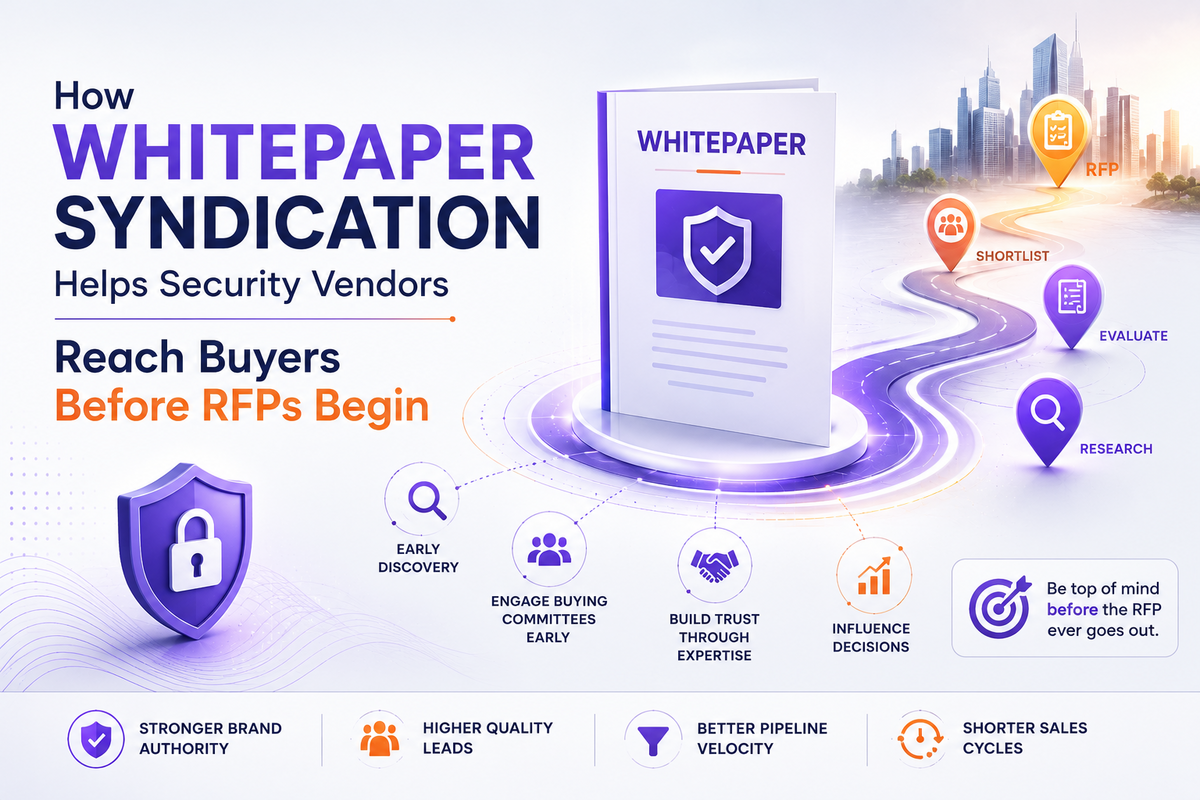
Enterprise cybersecurity buying has changed dramatically over the past few years. The traditional process, where buyers contacted vendors early in their evaluation journey, is steadily disappearing. Today, security leaders spend weeks—or even months, researching independently before they issue a Request for Proposal (RFP). They compare technologies, evaluate analyst reports, review technical documentation, and explore peer recommendations long before engaging a sales team.
This shift is being accelerated by AI-powered search experiences, digital buying committees, and growing cybersecurity complexity. Organizations are evaluating AI security platforms, identity protection, cloud security, data security, and cyber resilience solutions simultaneously, creating longer and more research-intensive buying journeys. According to recent industry research, B2B technology buyers now complete a significant portion of their purchasing process before speaking with vendors, making educational content more influential than ever.
For cybersecurity vendors, this changing landscape presents both a challenge and an opportunity. Winning enterprise deals increasingly depends on being visible during the research phase, not just during the procurement process. This is precisely where whitepaper syndication is becoming one of the most valuable demand generation strategies available.
Enterprise Security Buyers Are Researching Earlier Than Ever
The cybersecurity market has become increasingly sophisticated. Organizations are no longer purchasing standalone security tools. Instead, they are investing in integrated security ecosystems that include AI-powered threat detection, identity and access management, cloud security, zero trust architectures, security automation, and AI governance.
Recent developments have only increased the urgency. The rapid adoption of generative AI, autonomous AI agents, and enterprise copilots has introduced new attack surfaces that require organizations to rethink cybersecurity strategies. As businesses continue integrating AI capabilities into their ERP platform, CRM, and other mission-critical enterprise applications, securing interconnected systems has become a strategic priority. Governments worldwide continue to strengthen cyber regulations, while security frameworks increasingly emphasize resilience, identity verification, and AI risk management. At the same time, high-profile ransomware attacks, software supply chain vulnerabilities, and AI-driven phishing campaigns continue to dominate security conversations across industries.
As a result, security buyers are consuming more educational content before initiating procurement. CISOs, security architects, compliance officers, IT leaders, and risk teams are collaborating much earlier to understand emerging technologies, regulatory expectations, implementation challenges, and return on investment.
Rather than searching for product brochures, enterprise buyers increasingly seek research reports, implementation guides, analyst insights, technical whitepapers, and industry best practices. These resources help organizations define requirements before formal procurement begins.
For cybersecurity vendors, visibility during this research window is becoming a significant competitive advantage. Vendors that educate buyers early often establish credibility before competitors even become aware that an opportunity exists.
Why Whitepaper Syndication Creates Earlier Buyer Engagement
Traditional lead generation often focuses on capturing prospects who are already evaluating vendors. Whitepaper syndication reaches organizations much earlier by placing valuable educational content where enterprise buyers actively conduct research.
Instead of promoting product features alone, security vendors can distribute thought leadership that addresses evolving challenges such as AI governance, identity security, cloud protection, ransomware resilience, regulatory compliance, or secure software development. Buyers engage with this information because it helps solve real business problems rather than simply promoting a solution.
This approach aligns closely with how enterprise purchasing decisions are now made. Security investments rarely involve a single stakeholder. Technology leaders, compliance teams, finance executives, procurement professionals, and business decision-makers all influence purchasing decisions. Educational content enables vendors to reach multiple members of these buying committees throughout the decision-making process.
Another important trend is the growing use of dark intent intelligence. Many enterprise buyers leave digital signals while researching cybersecurity topics without directly contacting vendors. By combining whitepaper syndication with intent data, organizations can better understand which companies are actively exploring AI security, identity management, cloud security, zero trust, or cyber resilience initiatives. This allows marketing and sales teams to prioritize outreach based on genuine research activity instead of relying solely on form submissions.
AI is also enhancing syndication strategies. Marketing teams are increasingly using AI-powered analytics to identify the content topics generating the strongest engagement, personalize follow-up campaigns, and measure which research assets influence buying decisions across complex enterprise sales cycles.
Building Trust Before Procurement Starts
The most successful cybersecurity vendors recognize that enterprise buyers do not purchase security solutions overnight. Trust develops gradually through consistent education, valuable insights, and demonstrated expertise.
Whitepaper syndication supports this trust-building process by positioning vendors as industry educators rather than simply technology providers. High-quality research that explains evolving threats, regulatory changes, AI security challenges, or implementation strategies helps organizations make informed decisions while strengthening vendor credibility.
This approach is becoming increasingly important as AI transforms cybersecurity itself. Organizations are evaluating solutions that protect AI models, monitor AI agents, secure sensitive enterprise data, and strengthen identity verification across intelligent systems. Buyers want vendors that understand these rapidly changing environments and can provide practical guidance beyond product capabilities.
Security vendors are also recognizing that successful campaigns extend beyond lead volume. Marketing leaders increasingly measure content engagement, buying committee participation, account progression, and pipeline influence to understand how educational content contributes to long-term revenue growth.
As cybersecurity markets continue to evolve, vendors that invest in trusted educational experiences will be better positioned to build meaningful relationships with enterprise buyers. By the time formal RFPs are issued, those organizations are often already familiar with the vendors that consistently provided valuable insights throughout their research journey.
The future of cybersecurity marketing is shifting from product-first messaging to knowledge-first engagement. Whitepaper syndication reflects this evolution by helping security vendors participate in buying conversations before procurement officially begins. In a marketplace where trust, expertise, and timing increasingly determine competitive success, reaching buyers during the earliest stages of research may prove to be one of the most effective strategies for generating qualified opportunities and accelerating enterprise growth.