

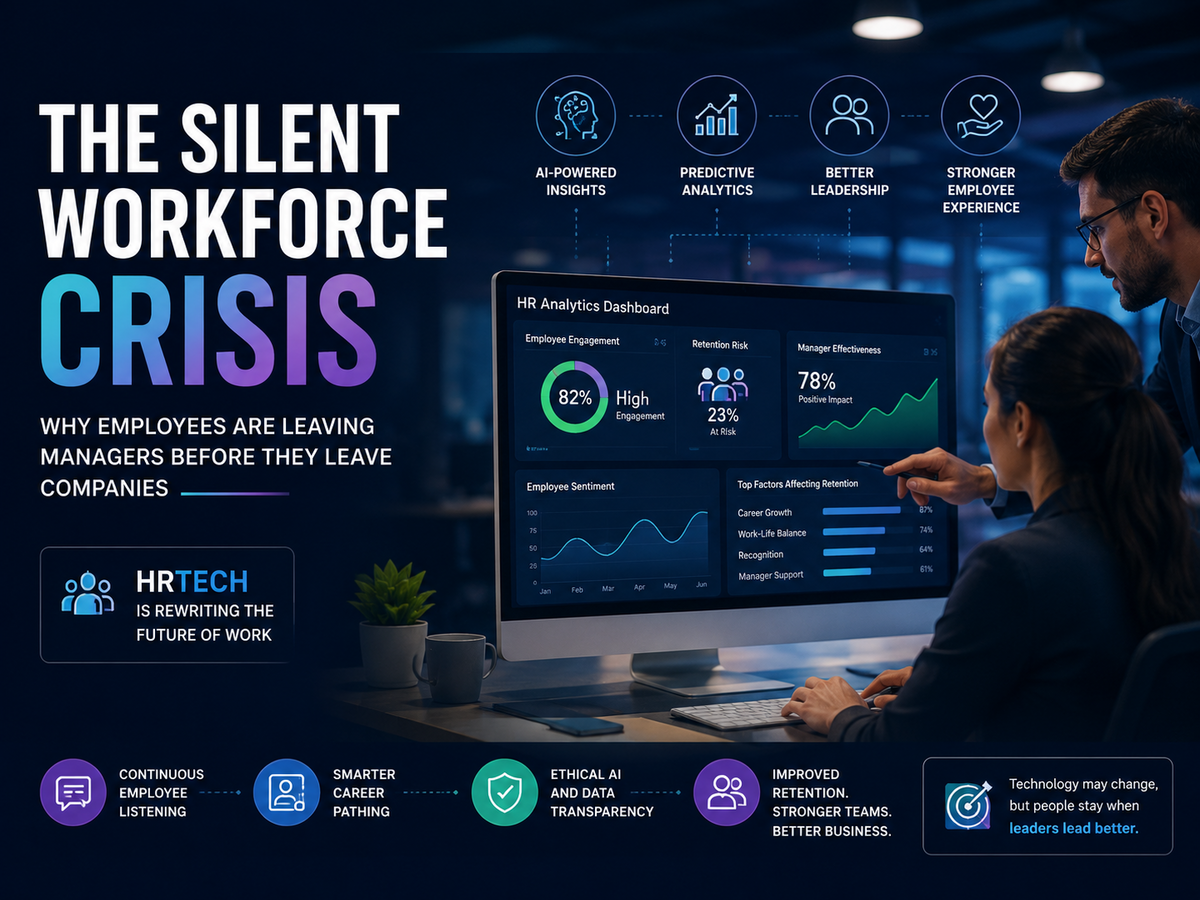
Every resignation tells a story but not always the one employers think. For years, organizations blamed high turnover on salaries, remote work, or better opportunities elsewhere. Yet a growing body of workplace research points to a more uncomfortable reality: employees often don't leave companies they leave poor management.
This shift is fueling one of the fastest-growing areas in HRTech. Instead of focusing solely on recruitment and payroll automation, organizations are investing in intelligent technologies that monitor employee engagement, measure leadership effectiveness, predict attrition, and provide managers with real-time coaching insights. As businesses face rising talent shortages and increasing recruitment costs, retaining employees has become just as important as hiring them.
Leadership Analytics Is Becoming the New Performance Metric
Traditional performance reviews have long focused on employees, while managers received relatively limited feedback beyond annual evaluations. HRTech platforms are changing this dynamic by continuously measuring leadership impact through employee sentiment, engagement scores, communication patterns, and team productivity data.
Modern people analytics platforms help organizations identify managers whose teams consistently experience higher turnover, lower engagement, or reduced collaboration. Instead of waiting until employees resign, HR leaders can intervene early with coaching, training, and leadership development programs.
This proactive approach is transforming management from an instinct-driven role into a data-informed discipline.
AI Is Helping Managers Become Better Leaders
Artificial intelligence is increasingly serving as a workplace coach rather than just an administrative assistant. New HRTech solutions analyze meeting patterns, employee feedback, one-on-one conversations, and engagement surveys to recommend practical actions for managers.
Some platforms remind leaders to recognize employee achievements, encourage regular check-ins, recommend learning resources, or identify employees who may require additional support. Rather than replacing human judgment, AI provides managers with timely insights that improve communication and strengthen workplace relationships.
As hybrid work continues to evolve, these intelligent recommendations help managers maintain meaningful connections with distributed teams.
Employee Listening Has Moved Beyond Annual Surveys
Annual engagement surveys often capture employee opinions long after problems have already developed. HRTech vendors are replacing these outdated methods with continuous listening platforms that collect real-time feedback through pulse surveys, anonymous comments, workplace collaboration tools, and employee sentiment analysis.
Organizations can now detect changes in morale within days instead of months. This enables HR teams to address workplace concerns before they become widespread issues affecting productivity or retention.
Continuous listening also gives employees confidence that their voices are being heard more frequently, creating stronger trust between leadership and the workforce.
Burnout Detection Is Becoming a Strategic Priority
Employee burnout is no longer viewed as an individual challenge it is increasingly recognized as a business risk. HRTech platforms now combine workload analysis, calendar activity, meeting frequency, overtime patterns, and engagement indicators to identify early signs of employee fatigue.
Rather than monitoring individuals for disciplinary purposes, these systems help organizations recognize structural issues such as excessive workloads, poor resource allocation, or ineffective management practices.
By identifying burnout risks earlier, companies can introduce workload adjustments, additional support, or wellness initiatives before employee wellbeing begins affecting business performance.
Career Growth Technology Is Redefining Employee Retention
One of the leading reasons employees seek opportunities elsewhere is the perception of limited career progression. Modern HRTech platforms address this by creating personalized career development experiences for every employee.
AI-powered career pathing solutions recommend learning opportunities, mentorship programs, certifications, and internal job openings based on an employee's existing skills and long-term aspirations. Employees gain greater visibility into potential career paths without leaving the organization.
For employers, this creates a stronger internal talent pipeline while reducing recruitment expenses and preserving institutional knowledge.
Predictive Attrition Models Are Helping HR Stay Ahead
Instead of reacting to resignations after they occur, organizations are increasingly using predictive analytics to estimate employee turnover risks. HRTech platforms analyze historical workforce data, engagement trends, compensation benchmarks, promotion history, and workplace behaviors to identify employees who may be considering leaving.
While these predictions are never absolute, they allow HR leaders to conduct meaningful conversations, address concerns, and improve retention strategies before valuable employees decide to resign.
The emphasis remains on supporting employees rather than monitoring them unnecessarily, making ethical implementation essential.
Trust and Transparency Are Driving HRTech Innovation
As organizations collect more workplace data, transparency has become a defining feature of modern HRTech solutions. Employees increasingly expect clear communication regarding how their information is collected, analyzed, and used.
Technology vendors are responding by building stronger privacy controls, transparent AI decision-making processes, and governance frameworks that prioritize responsible data usage. Organizations adopting these tools are recognizing that employee trust is just as valuable as technological capability.
Responsible HRTech implementation requires balancing innovation with fairness, privacy, and accountability.
The Future of HR Belongs to Employee-Centric Technology
The next generation of HRTech is moving beyond operational efficiency toward creating healthier, more engaged workplaces. Intelligent platforms are helping organizations understand what employees truly need while equipping managers with actionable insights to become better leaders.
As competition for skilled professionals intensifies, businesses that invest in leadership development, employee experience, and predictive workforce intelligence will likely outperform organizations focused solely on recruitment. The companies winning tomorrow's talent war may not be those offering the highest salaries they may simply be the ones creating workplaces where people genuinely want to stay.
In the years ahead, HRTech will continue to evolve, but its greatest impact may not come from automating processes. Instead, it will come from strengthening the human relationships that have always been at the heart of successful organizations.