
The Life Loop: A Unified Model for Adaptive Systems
Published on 26 Jan 2026
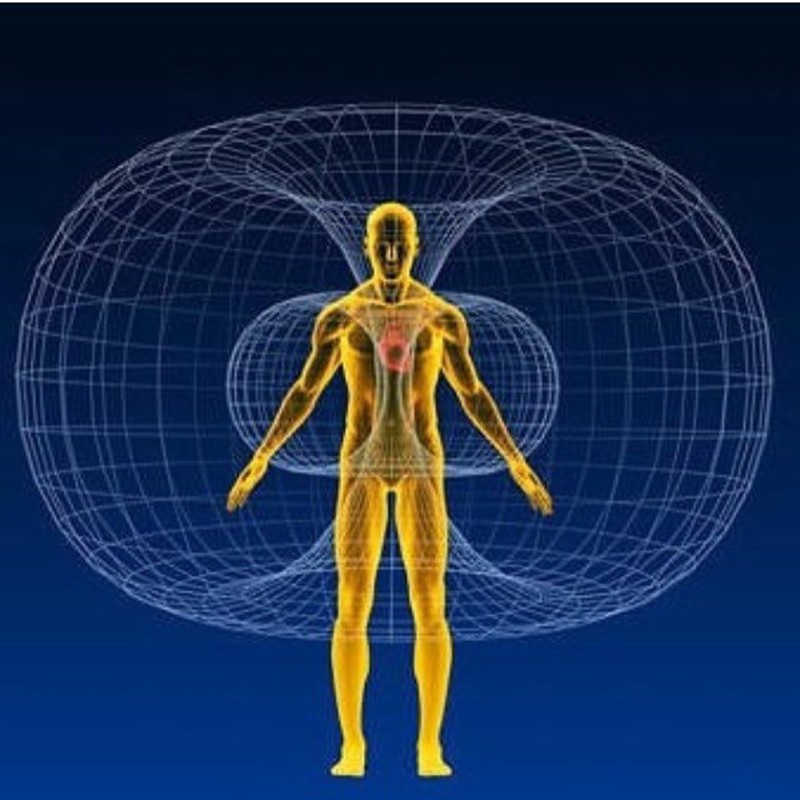
Across biology, technology, and engineered systems, one challenge remains constant: how do complex systems maintain coherence while adapting to continuous change? From neural networks to ecological systems and modern AI, many structures appear radically different on the surface—yet behave in surprisingly similar ways beneath. The Life Loop introduces a minimal, cross-domain systems architecture that explains how adaptive, life-like behavior emerges without relying on metaphysics or abstract teleology.
Rather than focusing on outcomes, this framework examines the recurring structural dynamics that allow systems to sense, adapt, stabilize, and evolve. The result is a unifying lens for understanding coherence and information integration across domains.
Understanding the Core Challenge of Adaptive Systems
Why Traditional Models Fall Short
Most system models are domain-specific. Biological systems are studied separately from physical materials, electronics, or artificial intelligence. This siloed approach makes it difficult to explain why similar patterns—such as branching structures, memory formation, or feedback loops—appear repeatedly across unrelated fields.
The Missing Link
What’s often missing is a minimal architectural model that explains how adaptation happens, not just where. The Life Loop addresses this gap by identifying a repeating cycle present in systems that sustain coherence under change.
The Life Loop Architecture: Four Interdependent Phases
Flow as the Trigger
At the foundation of every adaptive system is flow—the movement of energy, charge, matter, or information. Flow initiates activity, but on its own, it is transient and unstable.
Connection as the Translator
Connections regulate and interpret flow. Whether through ion channels, bonding forces, circuitry, or model architectures, connections determine how raw movement becomes structured interaction.
Form as Stabilized Memory
Form represents the system’s settled state after interaction. This is where history is encoded—through structural changes, stored charge, synaptic modification, or internal representations. Without form, systems cannot retain learning.
Extension as Environmental Coupling
Extension allows systems to reach outward—sensing, stabilizing, and interacting with their environment. Branching structures, feedback loops, and outward-facing interfaces are not optional add-ons; they are essential for sustained adaptation.
A Structural Solution to Distributed Memory
The Ion Advanced Memory Bank (I.A.M. Bank)
One of the central challenges in both biological and artificial systems is memory formation. The Life Loop introduces the I.A.M. Bank to explain how repeated flow through the same pathways induces persistent structural change.
Why This Matters
Memory, in this model, is not confined to a single storage unit. Instead, it is distributed across structural adaptations—whether in neural tissue, materials, or intelligent systems. This offers a powerful alternative to centralized memory models.
From Physical Systems to Human Behavior
A Simple Behavioral Demonstration
The Life Loop applies beyond physical substrates. Even human communication follows the same architecture. A joke, for example, requires delivery, interpretation, tension buildup, and release. Without the final feedback loop, the interaction fails to stabilize.
This illustrates a critical insight: systems only achieve coherence when the loop is completed.
Implications Across Emerging Technologies
Why This Framework Matters Now
As systems become more complex—especially in AI, materials science, and adaptive engineering—the need for architectures that support continual learning and environmental coupling grows.
What the Life Loop Enables
-
Designing adaptive systems that remain coherent over time
-
Engineering memory through structural change, not static storage
-
Building AI and materials that learn through interaction, not isolation
A Framework Worth Exploring Further
The Life Loop does not replace existing models—it connects them. By revealing a shared architectural pattern across domains, it opens new possibilities for research, engineering, and system design.
Download now to read more and explore the full framework in detail.