
How Agentic AI Is Changing Life Sciences Operations
Published on 16 Oct 2026
Overview
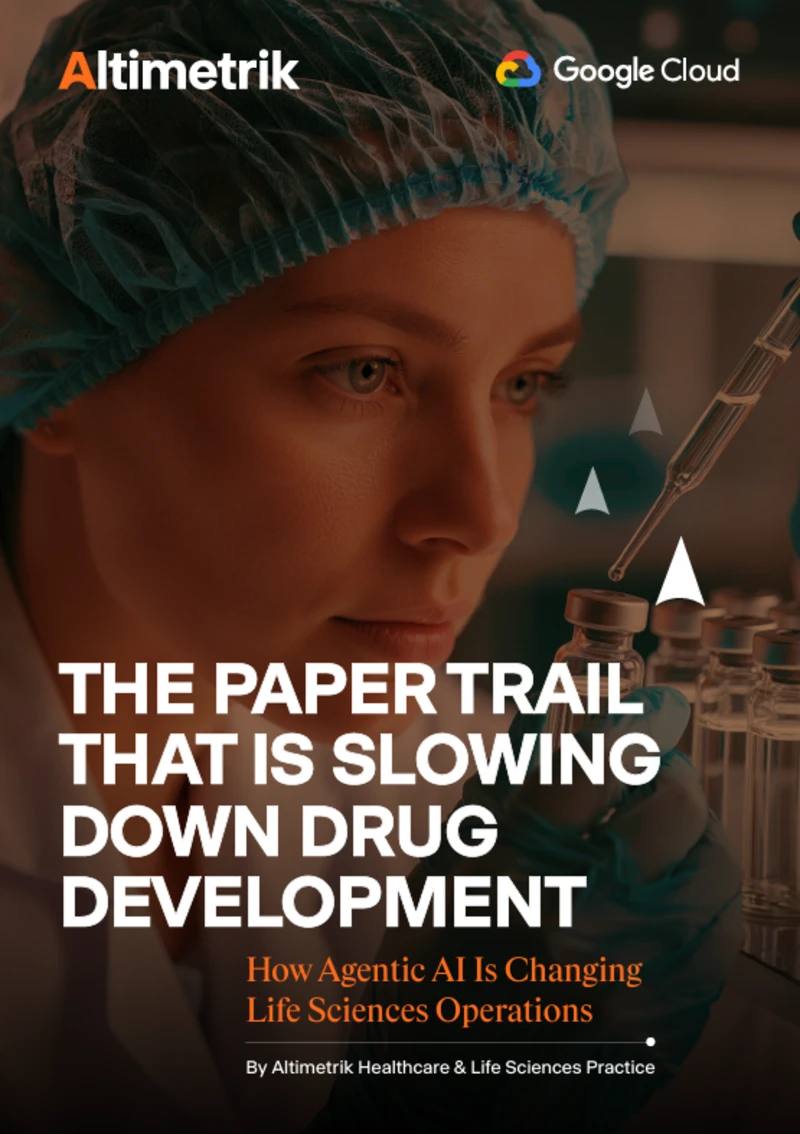
The Paper Trail That Is Slowing Down Drug Development explores how agentic AI can transform life sciences operations by reducing document-heavy workflows and enabling faster, more informed decisions across pharmaceutical manufacturing and quality management.
Key Challenges
Life sciences organizations spend significant time reviewing Certificates of Analysis (COAs), batch records, deviation reports, and Quality Management System (QMS) documentation. Disconnected data and unstructured records make it difficult to identify out-of-trend signals, recognize recurring quality issues, and prevent deviations from happening again.
How Agentic AI Helps
The whitepaper explains how agentic AI connects manufacturing, quality, supply chain, and regulatory data to identify patterns, flag potential risks, and provide decision-ready insights. It supports batch release readiness, deviation analysis, and Corrective and Preventive Action (CAPA) workflows while maintaining human oversight and traceability to source documents.
Compliance and Governance
The report highlights the importance of governed AI in regulated life sciences environments. Source-level traceability, configurable human-in-the-loop reviews, documented approvals, and audit-ready evidence help organizations maintain accountability and support Good Manufacturing Practice (GMP) requirements.
Business Impact
Featuring a global pharmaceutical case study involving radioligand therapy, the whitepaper demonstrates how an integrated data hub can improve release readiness visibility, reduce manual reconciliation, and enable faster, more confident operational decisions.
Conclusion
Discover how agentic AI can help life sciences organizations move beyond document-heavy processes toward intelligent, evidence-based decisions, improving operational efficiency while preserving quality, compliance, and human control.