

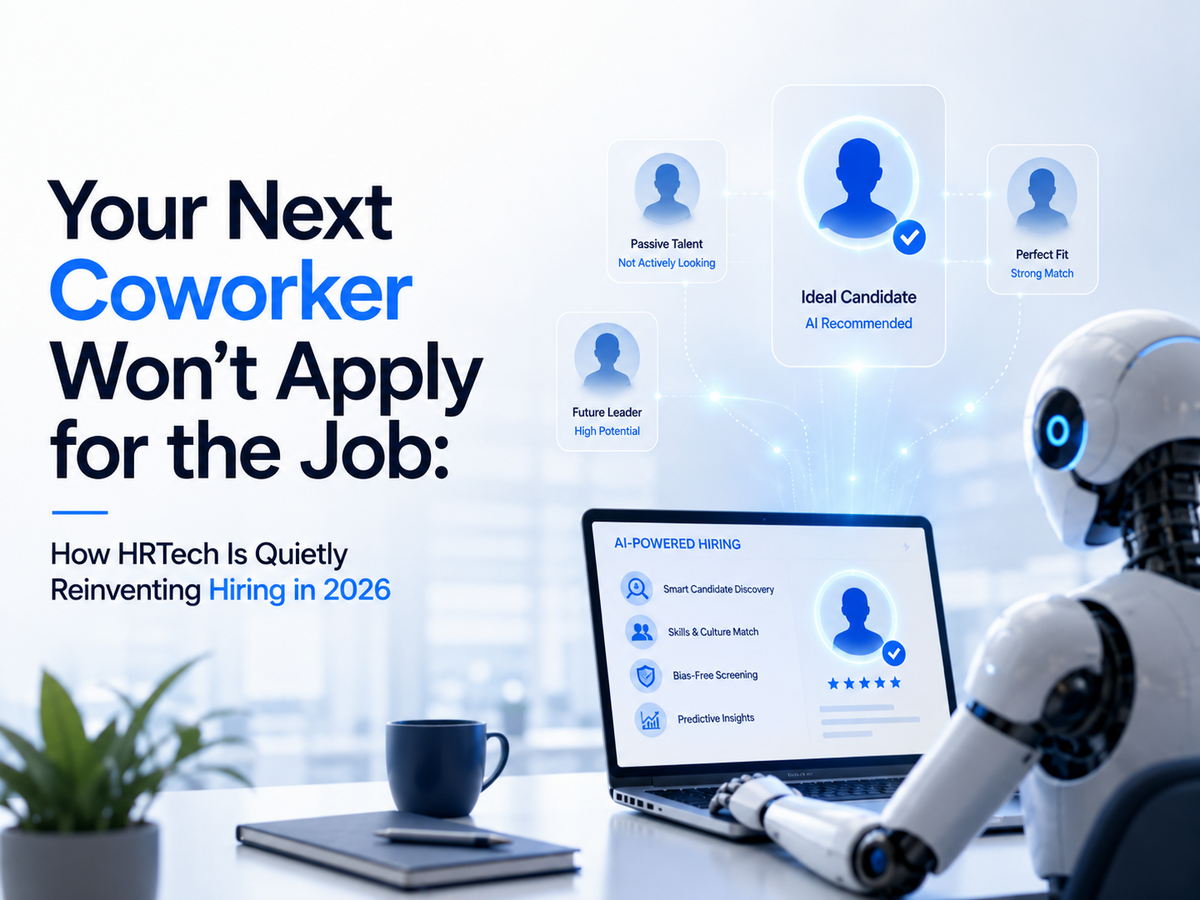
The hiring process is undergoing one of its biggest transformations in decades, and surprisingly, it's happening behind the scenes. While headlines often focus on artificial intelligence replacing jobs, the real story is different. AI isn't just changing who gets hired—it is fundamentally changing how organizations discover talent, evaluate candidates, onboard employees, and retain top performers.
Across industries, HRTech is evolving from a back-office function into a strategic driver of business growth. Modern organizations are no longer relying solely on recruiters and spreadsheets. Instead, they're adopting intelligent platforms that automate repetitive tasks, deliver workforce insights, and create better employee experiences from recruitment to retirement.
As businesses compete for increasingly specialized talent, HR leaders are recognizing that technology is no longer optional. It has become one of the most important investments for building resilient and future-ready workforces.
AI Is Reshaping the Recruitment Journey
Traditional recruitment often involves reviewing hundreds of resumes, scheduling interviews, coordinating hiring managers, and communicating with candidates across multiple channels. These manual processes consume valuable time while slowing hiring decisions.
Today's HRTech platforms are transforming this experience through AI-powered recruitment. Intelligent systems can screen resumes, identify suitable candidates, rank applications based on skills, and even automate interview scheduling.
Some platforms now analyze job descriptions and recommend ways to reduce unconscious bias by using more inclusive language. Others provide predictive insights into candidate success based on experience, competencies, and organizational fit.
Rather than replacing recruiters, these innovations allow HR teams to spend more time building relationships with candidates and less time managing administrative work.
Employee Experience Has Become a Business Priority
Hiring the right people is only the beginning. Retaining talent has become equally important, especially as hybrid and remote work continue to reshape workplace expectations.
Modern HRTech solutions focus heavily on employee experience. Digital onboarding platforms help new hires become productive faster through personalized learning paths, automated documentation, and collaborative workflows.
Employee engagement platforms collect continuous feedback instead of relying solely on annual performance reviews. Real-time sentiment analysis allows HR teams to identify burnout risks, improve workplace culture, and address concerns before they affect productivity.
Organizations increasingly understand that employee experience directly influences customer experience, innovation, and long-term business performance.
Skills Are Replacing Job Titles
One of the biggest shifts within HRTech is the move toward skills-based hiring.
Instead of filtering candidates primarily by degrees or previous job titles, organizations are evaluating demonstrated skills, certifications, project experience, and learning potential.
AI-powered talent intelligence platforms map workforce capabilities, identify skill gaps, and recommend personalized learning opportunities for employees.
This approach not only expands access to qualified talent but also helps businesses prepare for rapidly changing market demands.
As technology evolves faster than traditional education, continuous learning is becoming a competitive advantage rather than an optional benefit.
Workforce Analytics Are Driving Smarter Decisions
HR has traditionally relied on historical reports to understand workforce performance. Today's HRTech platforms provide real-time workforce intelligence instead.
Advanced analytics dashboards combine recruitment metrics, employee engagement, turnover trends, diversity data, compensation benchmarks, and productivity insights into a single view.
Business leaders can now predict hiring needs, identify retention risks, and evaluate workforce planning strategies using data rather than assumptions.
Predictive analytics also helps organizations understand which roles will become increasingly difficult to fill and where future skill shortages may emerge.
This shift enables HR leaders to move from reactive decision-making to proactive workforce planning.
Automation Is Freeing HR Teams for Strategic Work
Administrative work has long limited the strategic impact of HR departments.
Modern HRTech platforms automate leave management, payroll processing, compliance documentation, benefits administration, interview scheduling, and onboarding workflows.
Generative AI is taking automation even further by drafting job descriptions, creating employee communications, answering HR policy questions through intelligent chatbots, and generating workforce reports within minutes.
Instead of spending hours managing repetitive tasks, HR professionals can focus on leadership development, organizational culture, succession planning, and employee wellbeing.
Technology is becoming a productivity multiplier rather than simply another software investment.
HRTech Is Becoming an Executive Conversation
Workforce strategy is no longer discussed only within HR departments.
Executive leadership teams increasingly rely on HRTech insights to support broader business decisions involving expansion, digital transformation, mergers, and workforce planning.
As labor markets become more competitive, businesses need greater visibility into workforce capabilities, future hiring demands, and employee engagement trends.
HR technology has become a valuable source of strategic intelligence, helping organizations align talent decisions with long-term business objectives.
The companies leading tomorrow are treating workforce data with the same importance as financial and operational data.
The Future of HRTech
The next generation of HRTech will move beyond automation toward intelligent workforce ecosystems.
AI agents will coordinate recruiting activities, recommend personalized career paths, identify emerging leadership talent, and continuously optimize workforce planning.
Virtual reality onboarding, AI-powered coaching assistants, predictive employee wellness monitoring, and skills intelligence platforms are expected to become increasingly common over the next few years.
Rather than replacing HR professionals, these innovations will amplify their ability to build stronger, more engaged, and future-ready organizations.
Final Thoughts
The biggest transformation in hiring isn't about replacing people with artificial intelligence. It's about giving HR teams the tools they need to make faster, smarter, and more human-centered decisions.
As businesses continue investing in digital transformation, HRTech is becoming one of the most influential technologies shaping the future of work. From AI-powered recruitment and workforce analytics to employee engagement and skills intelligence, modern HR platforms are redefining how organizations attract, develop, and retain talent.
The next competitive advantage may not come from hiring more people.
It may come from using HRTech to help every employee perform at their best.