

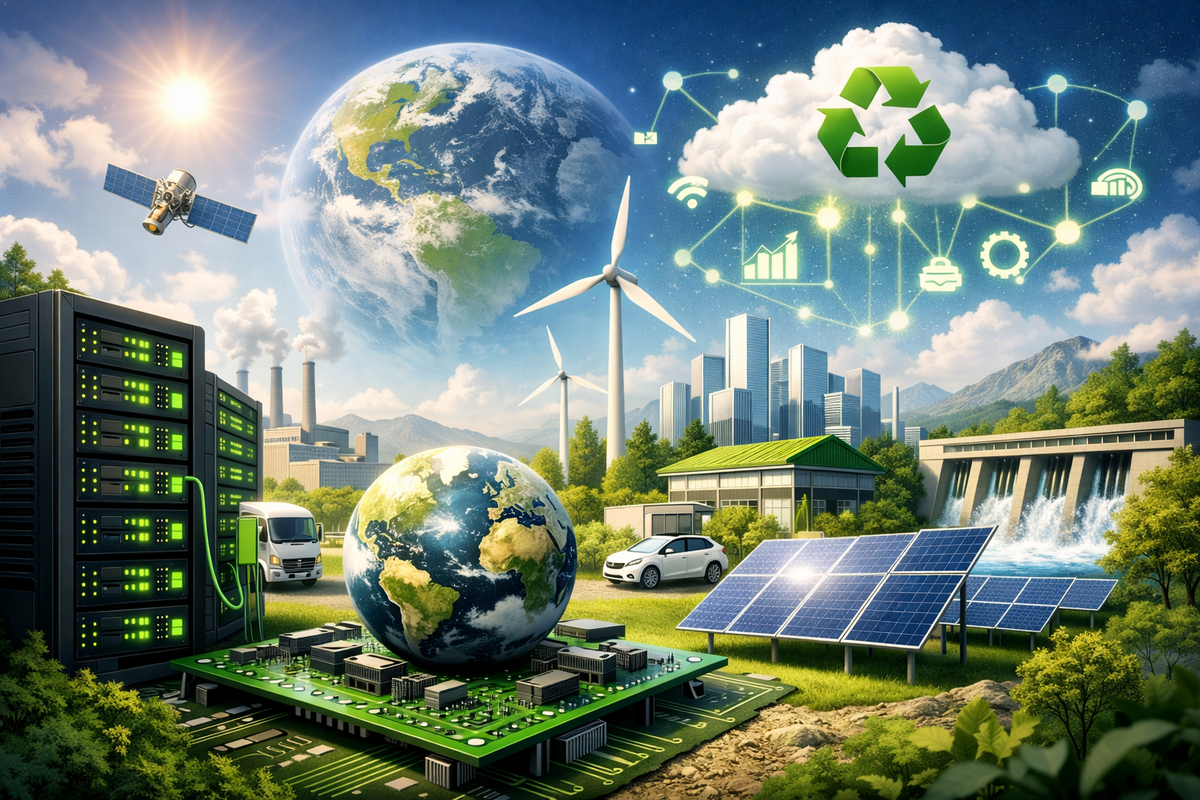
In 2024, "Sustainability" was often relegated to the final slides of a pitch deck—a "nice-to-have" CSR initiative. But as we move through 2026, the energy demands of massive AI inference and the "Cloud 3.0" transition have turned Green IT into a Hard Financial Metric.
With the introduction of the 2026 Carbon-Tax-on-Compute in several major markets, B2B buyers are no longer just asking about your software’s features; they are asking about its Inference Efficiency. We have entered the era of the Sustainable Compute Mandate. The white papers currently topping the charts on WhitePapersOnline.com are those that provide a technical roadmap for reducing the carbon debt of the enterprise tech stack.
The Crisis: The Hidden Cost of "Always-On" AI
In 2024, the goal was simply to "get AI working." In 2026, the goal is to "get AI lean." Running an unoptimized Large Language Model (LLM) for routine customer service or internal data processing is now viewed as an operational liability.
B2B procurement teams are now using Compute Intensity Scores (CIS) to evaluate vendors. If your software requires 3x the energy to perform the same task as a competitor, your "lower price" is quickly erased by carbon taxes and rising energy costs.
2026 White Paper Hot Topic: "The Lean Model Revolution: Architecting for Low-Inference, High-Impact B2B Operations."
3 Essential Green IT Themes for 2026 Research
If you are a hardware provider, cloud architect, or software developer, your 2026 white papers should focus on these high-stakes sustainability pillars:
1. "Carbon-Aware" Software Engineering
In 2026, code is being judged by its "Carbon Per Query."
-
The Angle: "Green Coding: Implementing Logic-Based Efficiency to Lower Enterprise Inference Debt."
-
The Value: Teaching developers how to write "Carbon-Aware" code that shifts heavy processing tasks to times (or regions) where renewable energy is at peak supply.
2. The Move to "Edge Sustainability"
Processing everything in the central cloud is becoming too expensive and energy-intensive.
-
The Angle: "Sovereignty & Sustainability: Why Localized Edge Inference is the Future of Green B2B."
-
The Value: Demonstrating how processing data at the source (on the device or local server) reduces the massive energy "tax" of constant data transmission.
3. Circularity in Hardware Procurement
Electronic waste is a top-tier compliance risk in 2026. B2B buyers want to know the "Life Cycle Story" of their hardware.
-
The Angle: "The Circular Server: Implementing 'Birth-to-Rebirth' Traceability in Enterprise Hardware."
-
The Value: Providing a framework for hardware-as-a-service models where every component is tracked, refurbished, and recycled with zero-landfill impact.
Why Sustainability is the New "Trust Signal"
In 2026, a "Green" white paper isn't just about the environment—it's about Operational Excellence. A company that has optimized its tech stack for sustainability is almost always a company that has a more efficient, lower-cost, and more resilient business model.
When your research is hosted on a specialized repository like WhitePapersOnline.com, you are reaching the Sustainability-Conscious Buyer. These are COOs and CTOs who are under pressure to hit "Net Zero" targets and are looking for vendors who can help them get there. A technical white paper on "Energy-Efficient AI" is no longer a niche interest; it is a core procurement document.
| Metric | Legacy IT Strategy (2024) | Sustainable IT Strategy (2026) |
| Primary KPI | Performance at any cost. | Performance-to-Power Ratio. |
| AI Strategy | "Bigger is Better" (Massive LLMs). | "Right-Sized" (Specialized SLMs). |
| Compliance | Financial Reporting. | Integrated Financial & Carbon Reporting. |
| Procurement | Lowest Upfront Cost. | Lowest Lifetime Carbon/Energy Cost. |
The Bottom Line: Efficiency is the Ultimate Competitive Advantage
The B2B buyer of 2026 is looking for Future-Proof Infrastructure. They know that energy prices and carbon regulations will only go in one direction.
To win a lead this year, your white paper must prove that your technology is as kind to the balance sheet as it is to the planet. Stop talking about "Digital Transformation" as an abstract goal and start talking about "Sustainable Optimization." In 2026, the greenest brand is the most profitable brand.