

For years, B2B marketing operated under a simple assumption: more content meant more opportunities to generate leads.
Brands published blogs daily, pushed out multiple social posts every week, launched email campaigns at scale, and invested heavily in content production. The objective was clear—maximize visibility and capture attention in an increasingly competitive digital landscape.
But in 2026, the industry is witnessing a major shift.
The content arms race that defined much of the last decade is beginning to lose momentum. Instead of asking, "How much content can we create?" leading B2B marketers are asking a different question:
"How much value does our content actually deliver?"
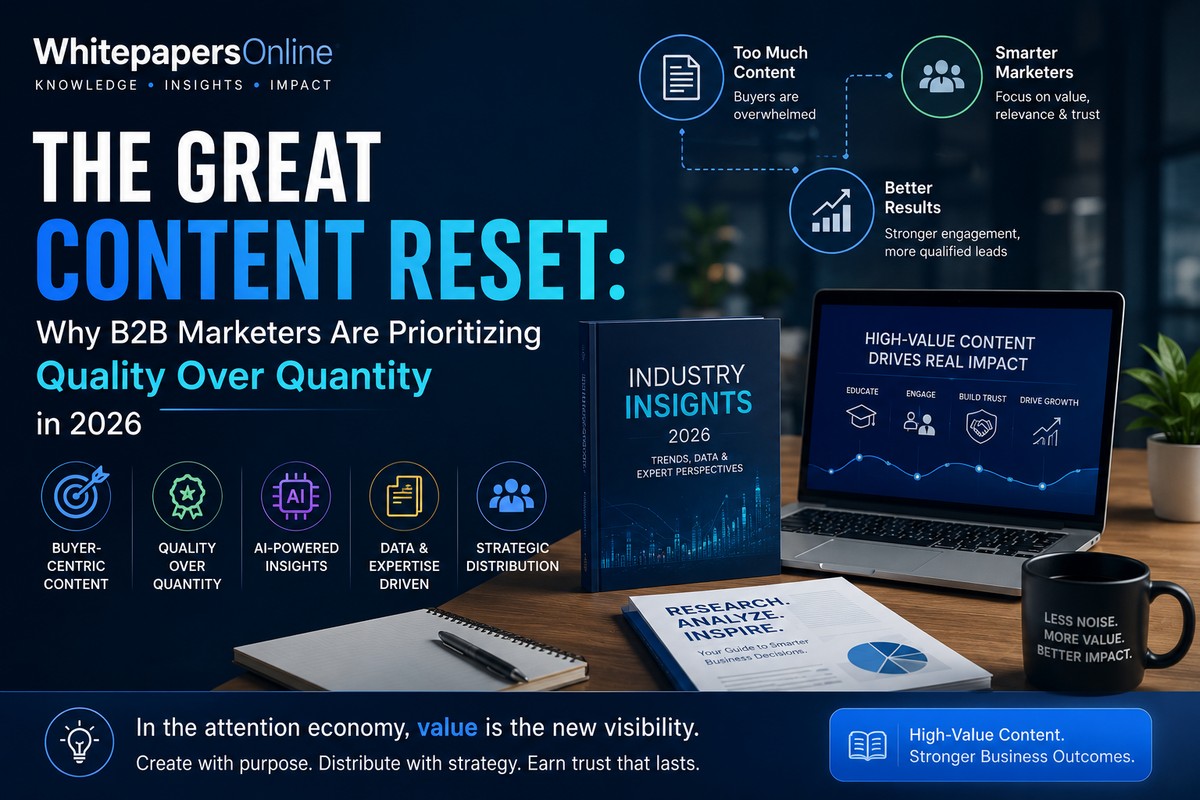
This shift marks what many industry observers are calling the Great Content Reset—a growing movement away from content volume and toward content effectiveness.
Buyers Are Drowning in Content
The challenge isn't a lack of information.
It's the overwhelming abundance of it.
Today's B2B buyers are exposed to thousands of marketing messages every day. From newsletters and LinkedIn posts to webinars, reports, podcasts, and AI-generated articles, the average decision-maker has more information available than they can realistically consume.
As a result, attention has become one of the scarcest resources in modern marketing.
Buyers are becoming increasingly selective about what they read, watch, and engage with. Generic content that simply repeats industry talking points is quickly ignored.
The reality is that publishing more content no longer guarantees better results.
In many cases, it simply contributes to the noise.
AI Has Changed the Content Equation
Artificial intelligence has dramatically accelerated content creation.
Marketers can now generate blogs, social media posts, email campaigns, summaries, and reports in a fraction of the time previously required.
While this has increased productivity, it has also created a new challenge.
The internet is becoming saturated with similar content.
When every company has access to the same AI tools, differentiation becomes increasingly difficult. Articles often cover identical topics, use similar structures, and offer comparable advice.
This is forcing marketers to rethink their approach.
Success is no longer determined by who can create the most content.
It's determined by who can create the most useful content.
The brands gaining traction are those combining AI efficiency with original research, unique insights, customer data, expert perspectives, and genuine thought leadership.
The Rise of Buyer-Centric Content
One of the most significant trends emerging in 2026 is the shift toward buyer-centric content strategies.
Instead of producing content for algorithms alone, marketers are increasingly creating content for real people with real challenges.
This means focusing on:
- Practical insights
- Actionable recommendations
- Industry expertise
- Educational resources
- Decision-support content
Buyers are rewarding brands that help them solve problems rather than simply promoting products.
In many cases, the most successful content isn't directly selling anything at all.
It's building trust.
And trust remains one of the strongest predictors of future purchasing decisions.
Why Content Distribution Matters More Than Ever
Creating valuable content is only half the battle.
Getting it in front of the right audience remains one of the biggest challenges facing B2B marketers.
Many organizations continue investing heavily in content production while underinvesting in distribution.
This imbalance often limits the impact of otherwise valuable assets.
Industry experts increasingly emphasize that content should be treated as a business asset, not a one-time campaign deliverable.
That means maximizing reach through strategic distribution channels such as:
- Whitepaper syndication
- Industry publications
- Targeted newsletters
- Professional communities
- Demand generation campaigns
- Audience-specific content networks
The goal is simple: ensure valuable content reaches decision-makers when they are actively seeking information.
Whitepaper Syndication Gains New Momentum
As content quality becomes a priority, whitepaper syndication is experiencing renewed interest among B2B organizations.
Unlike broad awareness campaigns, syndication focuses on connecting educational content with targeted audiences who have demonstrated interest in specific topics.
This approach aligns closely with modern buyer behavior.
Today's decision-makers prefer to educate themselves before engaging with vendors. Whitepapers, research reports, industry guides, and thought leadership content often play a critical role during this research phase.
When distributed effectively, these assets can generate meaningful engagement while supporting long-term demand generation objectives.
Platforms like Whitepapers Online are helping businesses amplify high-value content through targeted syndication strategies designed to reach relevant professional audiences.
As the competition for attention intensifies, strategic distribution is becoming just as important as content creation itself.
The Future Belongs to Meaningful Content
The marketing landscape of 2026 is making one thing increasingly clear:
Content volume is no longer a competitive advantage.
Relevance is.
Brands that continue prioritizing quantity over quality may find it increasingly difficult to stand out in crowded markets.
Meanwhile, organizations that focus on delivering genuine value, original insights, and educational experiences are building stronger relationships with buyers and generating more sustainable growth.
The Great Content Reset isn't about creating less content.
It's about creating content that deserves attention.
And in a world where attention is limited, that distinction matters more than ever.