

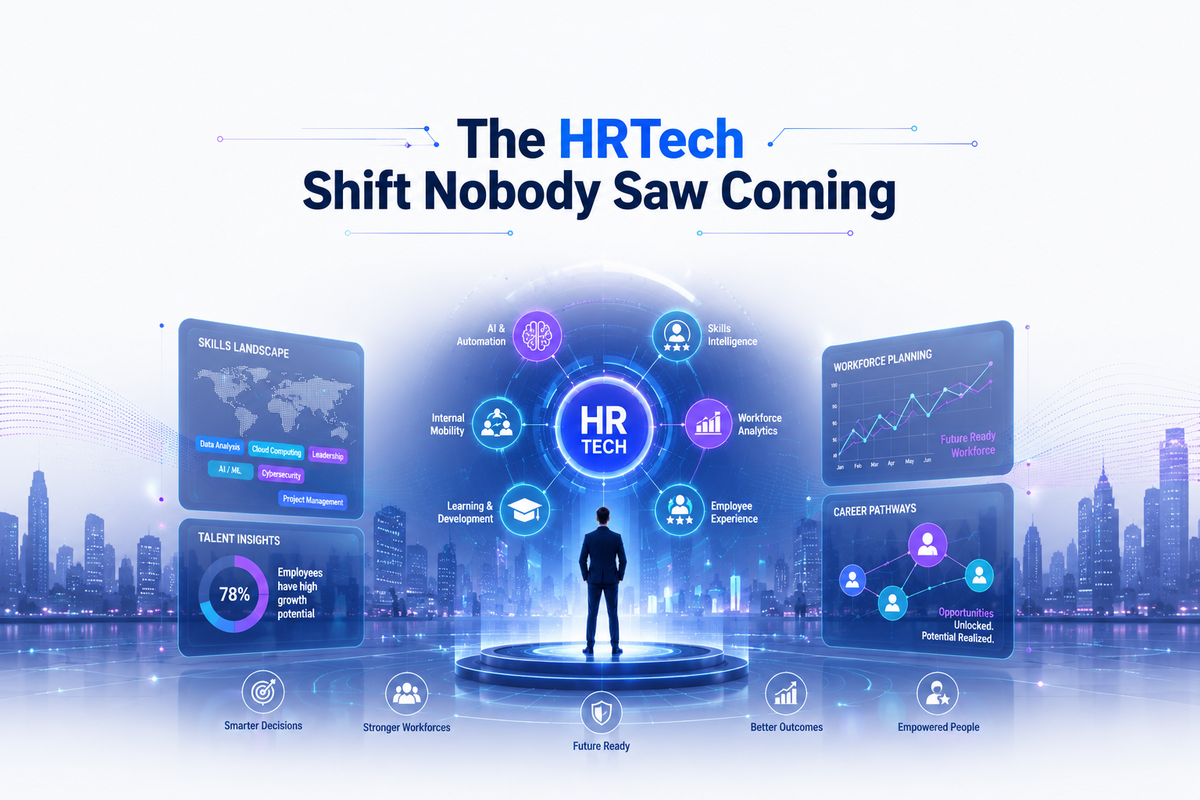
For years, HR technology was largely associated with streamlining administrative tasks—automating payroll, managing leave requests, and simplifying recruitment. While these innovations improved efficiency, they rarely influenced broader business strategy. Today, however, a quiet transformation is underway. HR technology is no longer just supporting human resources; it's shaping how organizations compete, innovate, and grow.
The biggest shift isn't another recruitment platform or employee engagement app. It's the rise of intelligent HR ecosystems powered by artificial intelligence, predictive analytics, and skills intelligence. Organizations are moving beyond simply managing employees—they're learning how to understand, develop, and future-proof their workforce.
This unexpected evolution is redefining the role of HR across industries.
From Human Resources to Human Intelligence
Businesses have traditionally relied on resumes, job descriptions, and annual performance reviews to make workforce decisions. While these methods provided structure, they often failed to reveal an employee's complete potential.
Today's HRTech platforms take a very different approach.
Modern systems analyze data from learning platforms, collaboration tools, certifications, project histories, and performance metrics to create a comprehensive picture of workforce capabilities. Instead of focusing solely on positions, organizations can now identify skills, uncover hidden expertise, and discover employees who are ready for new responsibilities.
This data-driven approach enables companies to make faster and smarter workforce decisions while reducing their dependence on external hiring.
Skills Are Becoming the New Currency
One of the most significant developments in HRTech is the growing emphasis on skills over job titles.
Digital transformation has accelerated the demand for capabilities in artificial intelligence, cybersecurity, cloud computing, automation, and data analytics. Unfortunately, many traditional job descriptions fail to reflect these evolving requirements.
Rather than asking, "Who fits this job?" employers are beginning to ask a far more strategic question: "Who already has the skills we need?" Skills intelligence platforms answer this by continuously mapping employee capabilities, identifying emerging skill gaps, and recommending opportunities for growth. Instead of relying heavily on external recruitment, organizations can redeploy existing talent, strengthen internal mobility, and create highly personalized learning experiences that prepare employees for future business needs.
AI Is Changing More Than Recruitment
Artificial intelligence first gained attention in HR through resume screening and candidate matching. Today, its role extends far beyond recruitment.
Modern AI platforms help organizations predict which employees may be at risk of leaving, recommend personalized learning paths, identify future leadership candidates, match employees with internal projects based on their skills, and forecast workforce requirements aligned with business objectives. Rather than replacing HR professionals, AI serves as a powerful decision-support system, enabling leaders to make evidence-based decisions faster and with greater confidence. For enterprises navigating constant market disruption, this level of workforce intelligence has become a significant competitive advantage.
Employee Learning Is Becoming Continuous
Corporate learning has undergone one of the biggest transformations within HR technology.
Traditional training programs often delivered the same content to every employee regardless of their role, aspirations, or existing capabilities. Modern HRTech platforms have shifted toward continuous, personalized learning. By analyzing skill gaps, organizational priorities, and individual career goals, these systems recommend learning experiences tailored to each employee.
An aspiring manager might receive leadership development courses, while an IT professional could be guided toward advanced cybersecurity certifications or cloud computing programs. This personalized learning journey not only improves employee engagement but also ensures organizations continuously build the capabilities needed for future growth.
Internal Mobility Is Taking Center Stage
Recruitment costs continue to rise, and competition for skilled professionals remains intense across nearly every industry.
Instead of relying exclusively on external hiring, organizations are increasingly turning their attention inward. Modern HRTech solutions identify employees with transferable skills who can successfully transition into new departments or roles through targeted upskilling and reskilling initiatives.
This strategy reduces hiring costs, shortens recruitment timelines, improves employee retention, and creates meaningful career progression opportunities. At the same time, businesses retain valuable institutional knowledge while employees gain clearer pathways for professional advancement.
Predictive Analytics Is Reshaping Workforce Planning
Perhaps the most transformative advancement in HRTech is the growing adoption of predictive workforce analytics.
Rather than reacting to staffing shortages or talent gaps after they occur, organizations can now anticipate future workforce needs months—or even years—in advance. Advanced HR platforms analyze workforce data to identify potential skill shortages, detect groups at higher risk of employee turnover, evaluate leadership succession readiness, simulate workforce planning scenarios, and forecast emerging capability requirements driven by changing business strategies.
These predictive insights enable executives to make proactive investments in talent development instead of relying solely on reactive hiring. As a result, HR is steadily evolving from an operational support function into a trusted strategic advisor that directly influences long-term business success.
Responsible AI Is Becoming a Business Priority
As artificial intelligence becomes more deeply integrated into HR processes, concerns surrounding transparency, fairness, employee privacy, and ethical decision-making continue to grow.
Organizations are responding by implementing responsible AI practices that prioritize explainable hiring algorithms, reduce bias in talent decisions, strengthen data governance policies, and ensure compliance with evolving regulations. Building trust has become just as important as deploying innovative technology. Businesses that successfully balance AI-driven innovation with ethical workforce management are more likely to earn employee confidence while protecting both their reputation and regulatory standing.
Why This Shift Matters
The workforce is evolving faster than traditional HR models were ever designed to accommodate.
Rapid technological innovation, changing employee expectations, and shifting business priorities demand a far more agile approach to workforce management. Modern HRTech provides organizations with real-time visibility into workforce capabilities, helping leaders understand existing talent, identify future opportunities, and prepare employees for roles that may not even exist today.
As a result, forward-thinking organizations are no longer viewing HR as simply an administrative department. Instead, they recognize it as a strategic driver of innovation, organizational resilience, and long-term competitive advantage.
Looking Ahead
The next generation of HR technology will extend far beyond automating repetitive administrative tasks. Its true value lies in helping organizations build adaptable, resilient workforces capable of responding to constant technological and economic change.
Over the coming years, businesses will continue embracing AI-powered workforce planning, skills intelligence platforms, personalized employee learning, internal talent marketplaces, predictive people analytics, and stronger ethical AI governance. Together, these innovations will transform HR into one of the most strategically important functions within modern organizations, enabling businesses to make smarter workforce decisions while fostering continuous employee growth.
Conclusion
The most significant HRTech transformation isn't happening through flashy software launches or isolated automation tools. It's unfolding quietly through intelligent technologies that help organizations understand their people more deeply than ever before.
Skills intelligence, AI-driven workforce planning, predictive analytics, and personalized learning are empowering businesses to unlock the potential of their existing workforce while preparing for challenges yet to come. For business leaders, the message is clear: the future of HR is no longer about managing people—it is about empowering them with technology that drives smarter decisions, stronger organizations, and sustainable growth.