

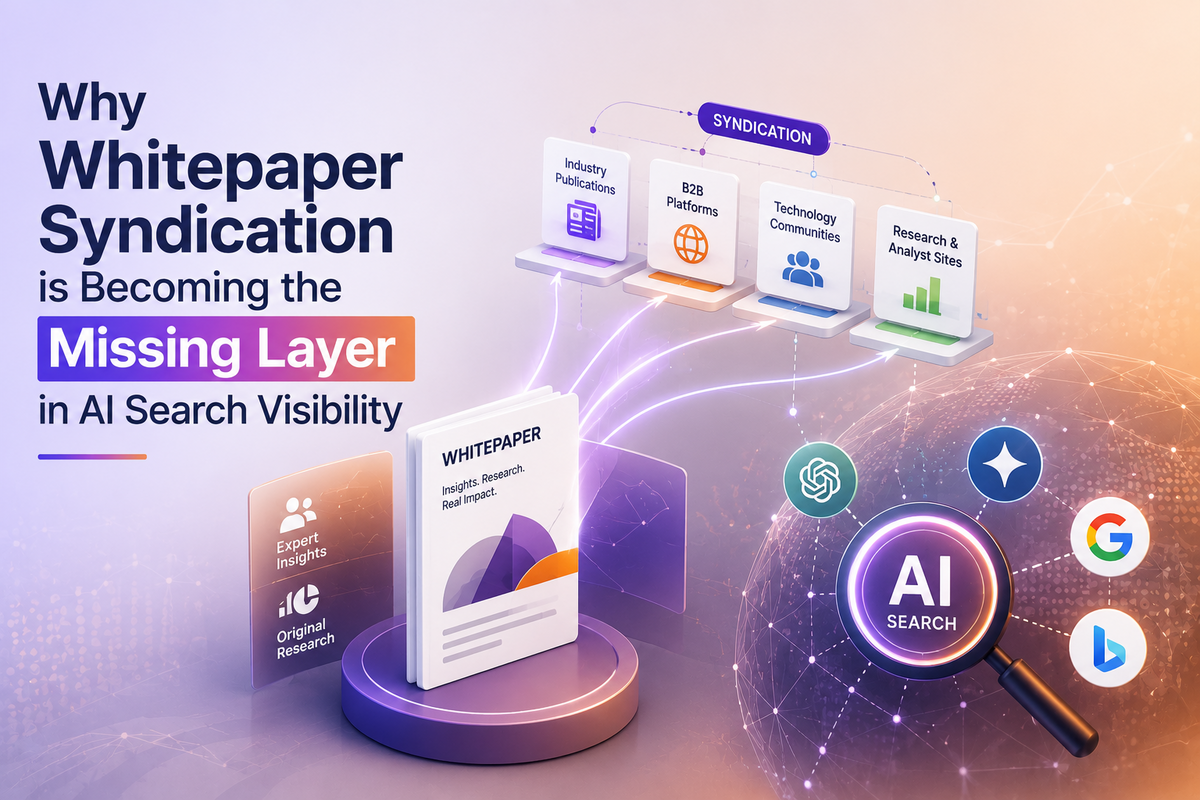
The way enterprise buyers discover vendors is changing faster than most marketing strategies can adapt. For years, search engine optimization focused on ranking web pages for keywords, while whitepaper syndication was viewed primarily as a lead generation tactic. Today, artificial intelligence is reshaping both of these disciplines.
AI-powered search experiences such as Google's AI Overviews, ChatGPT, Microsoft Copilot, Perplexity, and Gemini are changing how professionals research technology, compare vendors, and make purchasing decisions. Instead of clicking through multiple search results, buyers increasingly expect AI to summarize information, recommend solutions, and provide trusted sources in a single conversation.
This shift presents both an opportunity and a challenge for B2B marketers. Publishing valuable content on your own website is still important, but it is no longer sufficient. To become discoverable in AI-driven search environments, brands need authority beyond their own domains. That is why whitepaper syndication is emerging as the missing layer in modern AI search visibility.
AI Search Rewards Authority That Exists Beyond Your Website
Traditional SEO has always emphasized technical optimization, backlinks, and keyword relevance. While those signals still matter, AI systems evaluate information differently. Large language models look for consistent, credible information that appears across multiple trusted sources rather than relying solely on a single webpage.
Recent developments in AI-powered search have reinforced this trend. Google's AI Overviews continue expanding the way search results are presented, while enterprise buyers are increasingly using conversational AI platforms to evaluate vendors before ever visiting a company website. Research firms have also observed that B2B buying journeys are becoming more self-directed, with decision-makers consuming multiple sources of information before engaging with a sales team.
This evolution changes how content contributes to visibility.
A whitepaper published only on a corporate website has a limited digital footprint. The same whitepaper distributed through respected technology publications, professional communities, and industry content networks creates multiple authoritative references that AI systems can recognize and associate with a particular topic.
Rather than existing as a single document, the content becomes part of a broader knowledge ecosystem. Every trusted publication, citation, mention, and indexed version increases the likelihood that AI-powered search platforms identify the brand as a credible source of expertise. This broader digital presence helps organizations close the growing AI visibility gap between brands that are consistently surfaced by AI search experiences and those whose expertise remains confined to their own websites.
In many ways, whitepaper syndication is no longer simply expanding audience reach. It is expanding digital authority.
Whitepaper Syndication Is Becoming an AI Visibility Strategy
The purpose of syndication has traditionally been straightforward: distribute valuable content to reach new audiences and generate qualified leads.
That objective remains relevant, but its strategic value has grown considerably.
When enterprise content is distributed across trusted B2B publishing platforms, it creates signals that extend far beyond lead acquisition. These platforms often have strong domain authority, established editorial standards, and audiences that actively consume technology content. AI systems naturally place greater confidence in information that appears consistently across reputable sources instead of isolated marketing pages.
This creates an important competitive advantage.
Many organizations continue investing heavily in SEO while overlooking content distribution. They optimize blogs, improve technical performance, and publish thought leadership, yet much of that expertise remains confined to their own websites.
Brands that combine Enterprise SEO with strategic whitepaper syndication are building something much more valuable. They are creating multiple trusted touchpoints that reinforce expertise across the broader web. As AI assistants continue citing authoritative sources rather than simply ranking pages, distributed content becomes increasingly influential.
The conversation is no longer about whether a whitepaper generates downloads. It is about whether that whitepaper contributes to a brand's visibility wherever AI gathers information.
Visibility Alone Is No Longer Enough
Another important shift is taking place inside enterprise buying committees.
Technology purchasing decisions now involve multiple stakeholders, including IT leaders, procurement teams, finance executives, security specialists, and business decision-makers. Each participant researches vendors independently using different platforms and different search behaviors.
Some begin with Google. Others ask ChatGPT for vendor recommendations. Some explore industry publications, while others rely on peer communities or analyst reports.
This fragmented research process means a brand cannot depend on a single digital channel to establish credibility.
Whitepaper syndication helps bridge these fragmented discovery journeys by making high-value content accessible across multiple trusted environments where buyers naturally conduct research. Every additional authoritative publication strengthens brand familiarity long before a prospect completes a contact form or schedules a product demonstration.
Equally important, AI systems increasingly value original, experience-driven content over generic marketing copy. Whitepapers supported by proprietary research, industry insights, customer perspectives, or unique frameworks provide information that AI models are more likely to reference because they offer genuine informational value rather than promotional messaging.
This reinforces an important principle for modern B2B marketing. AI search visibility is no longer earned solely through optimization. It is earned through demonstrated expertise, distributed authority, and consistent knowledge sharing.
Organizations that understand this distinction are beginning to treat whitepaper syndication not as a standalone campaign but as part of their long-term content visibility strategy.
As AI continues reshaping digital discovery, the brands that become most visible will not necessarily publish the largest volume of content. They will be the ones whose expertise exists across the broader digital ecosystem, reinforced by trusted publications, respected industry platforms, and authoritative conversations.
Whitepaper syndication is quietly becoming one of the most effective ways to build that presence. In an era where AI increasingly decides which sources deserve attention, distributing knowledge strategically may prove just as important as creating it in the first place.