

For years, B2B marketers have measured success by one familiar metric: website traffic. The assumption was simple. If your content ranked well in search engines, potential buyers would click through, visit your website, and eventually enter your sales funnel. That model is rapidly changing.
Today, AI-powered search experiences, conversational assistants, and zero-click search results are fundamentally reshaping how buyers discover information. Instead of directing users to websites, search platforms increasingly provide complete answers within the search experience itself. Whether through AI-generated summaries, knowledge panels, or conversational search assistants, buyers are getting the information they need without ever visiting the original source.
This shift presents a new challenge for B2B organizations. Creating high-quality whitepapers is no longer enough. Even valuable thought leadership can struggle to reach decision makers if businesses continue relying solely on traditional SEO. In this evolving environment, Whitepaper Syndication has become one of the most effective ways to maintain visibility where modern buyers are actively consuming content.
Zero-Click Search Is Changing the Rules of Content Discovery
The rise of AI-driven search has accelerated one of the biggest changes in digital marketing. Buyers are conducting research differently than they did even two years ago. Instead of opening multiple browser tabs and comparing articles, they increasingly rely on AI assistants to summarize complex topics, recommend vendors, and answer industry-specific questions.
Recent developments from major search platforms have reinforced this trend. AI-generated search experiences now prioritize concise answers, synthesized information, and conversational responses over lists of blue links. As a result, many publishers are seeing declining organic click-through rates despite maintaining strong search rankings.
For B2B marketers, this creates an important distinction. Visibility no longer guarantees website visits. A brand may influence buyer decisions without receiving the traffic that traditionally measured content performance.
This changing behavior is particularly significant for long-form assets such as whitepapers. These resources contain detailed insights, research findings, industry analysis, and strategic recommendations that cannot always be fully represented in AI summaries. However, if buyers never discover the original content, its business value becomes limited.
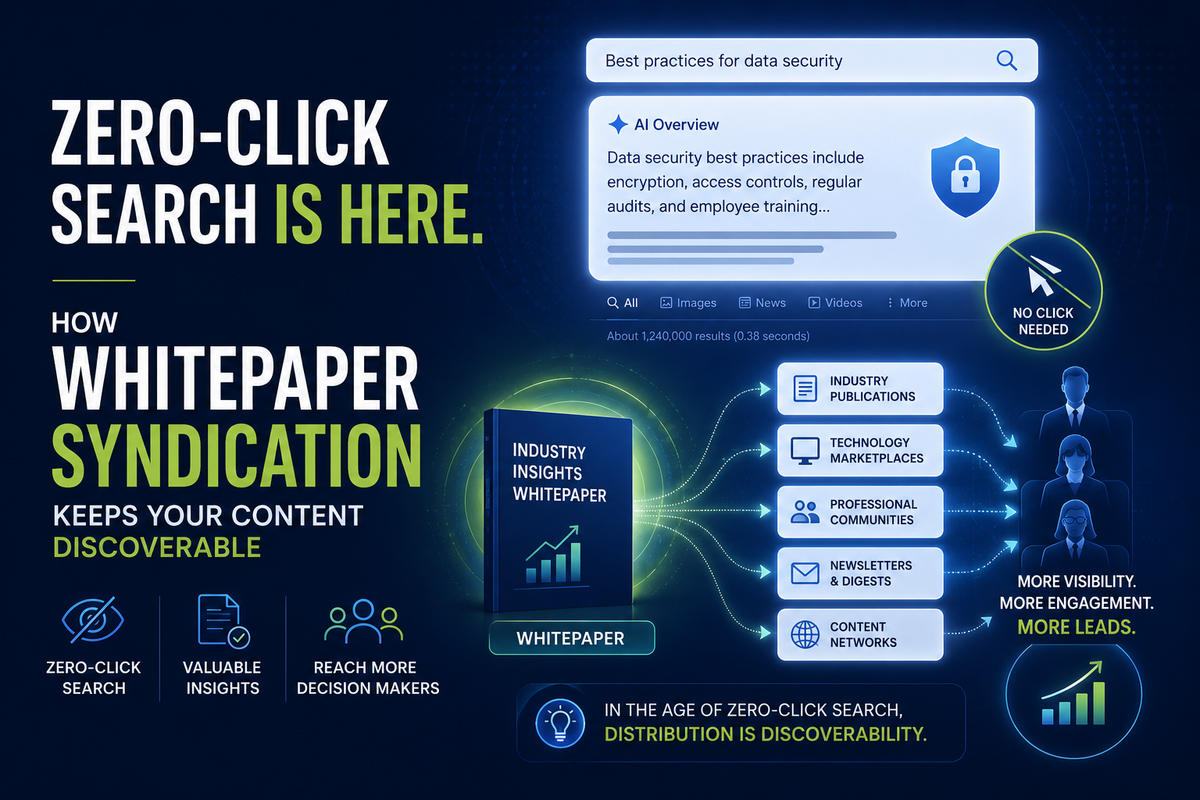
This is where Whitepaper Syndication becomes increasingly relevant. Instead of depending on search engines alone, organizations distribute their content across trusted industry publications, professional communities, technology marketplaces, and specialized content networks where business decision makers are already seeking information.
Rather than waiting for buyers to find content, syndication brings valuable insights directly to them.
Why Distribution Is Becoming More Valuable Than Rankings
Artificial intelligence has dramatically lowered the barrier to content creation. Businesses can now produce blogs, reports, and marketing materials faster than ever before. As a result, the internet is becoming increasingly saturated with similar content.
The competitive advantage is no longer simply publishing more content. It is ensuring that authoritative content reaches the right audience at the right stage of the buying journey.
This is why many B2B organizations are shifting their focus from content production to content distribution.
Whitepaper Syndication enables companies to amplify high-value assets far beyond their owned channels. Instead of relying exclusively on organic discovery, businesses place their research in front of targeted audiences based on industry, company size, job function, technology adoption, and purchase intent.
This approach aligns with another growing trend in B2B marketing: buying committees. Enterprise purchasing decisions are rarely made by a single individual. Multiple stakeholders evaluate vendors, conduct independent research, and validate recommendations before engaging with sales teams.
A syndicated whitepaper has the potential to reach technical evaluators, procurement professionals, business leaders, and executive sponsors simultaneously across multiple trusted platforms. That broader exposure creates more opportunities for meaningful engagement and qualified lead generation than depending solely on search traffic.
In many cases, syndication also generates stronger first-party engagement data, helping marketing teams understand which industries, accounts, and topics are attracting genuine buyer interest. As privacy regulations continue evolving and third-party cookies become less reliable, these insights are becoming increasingly valuable for demand generation strategies.
Whitepaper Syndication Is Becoming a Visibility Strategy
The role of whitepaper syndication is evolving beyond lead generation. It is becoming an essential component of modern content visibility.
Today's B2B buyers interact with content across numerous digital touchpoints before contacting a vendor. They may encounter research through industry newsletters, technology communities, professional media platforms, partner ecosystems, or specialized content hubs long before visiting a company's website.
Each of these interactions contributes to brand familiarity and buyer confidence.
When organizations consistently distribute insightful whitepapers across relevant channels, they establish credibility throughout the research process rather than appearing only when someone performs a specific search.
This approach also complements the growing influence of AI. Large language models increasingly reference publicly available, authoritative information from across the web. The broader a company's expert content is distributed through reputable platforms, the greater its opportunity to influence future AI-powered discovery experiences.
In other words, discoverability is no longer limited to search rankings. It extends to every trusted environment where buyers consume knowledge and where AI systems identify authoritative content.
For B2B decision makers, this represents an important strategic shift. Investments in high-quality research should not end when a whitepaper is published. The greatest return often comes from ensuring that valuable insights continue reaching new audiences across multiple channels throughout their lifecycle.
As zero-click search continues to reshape digital discovery, success will belong to organizations that think beyond website traffic alone. Businesses that prioritize content distribution alongside content creation will be better positioned to build authority, influence buying decisions, and remain visible in an increasingly AI-driven search landscape. In the years ahead, Whitepaper Syndication will not simply support content marketing strategies, it will play a central role in ensuring that valuable expertise remains discoverable, relevant, and impactful, regardless of how buyers choose to search.